Monster Hunter Stories 3: Twisted Reflection Review – A Monstie Adventure with a Darker Twist
Monster Hunter Stories 3: Twisted Reflection Review – A Fantastic Turn-Based RPG With Heart and Depth
Monster Hunter Stories 3: Twisted Reflection is a confident evolution of Capcom’s monster-taming RPG spin-off series. It takes the core appeal of Monster Hunter—tracking creatures, learning their patterns, collecting materials, building stronger gear, and forming a connection with powerful beasts—and reshapes it into a full turn-based RPG with strong storytelling, deep customization, and rewarding exploration.
The result is one of the most complete games in the Monster Hunter universe. It has a few issues, including uneven onboarding, occasional pacing problems, companion AI mistakes, and some late-game grinding. But when all of its systems come together, Monster Hunter Stories 3 becomes hard to put down. There is always another monster to hunt, another egg to collect, another habitat to restore, or another Monstie build to improve.
This is no longer just a modest side series. Twisted Reflection feels big, ambitious, and worthy of standing beside the mainline Monster Hunter games.
A Stronger Story With Real Political Stakes
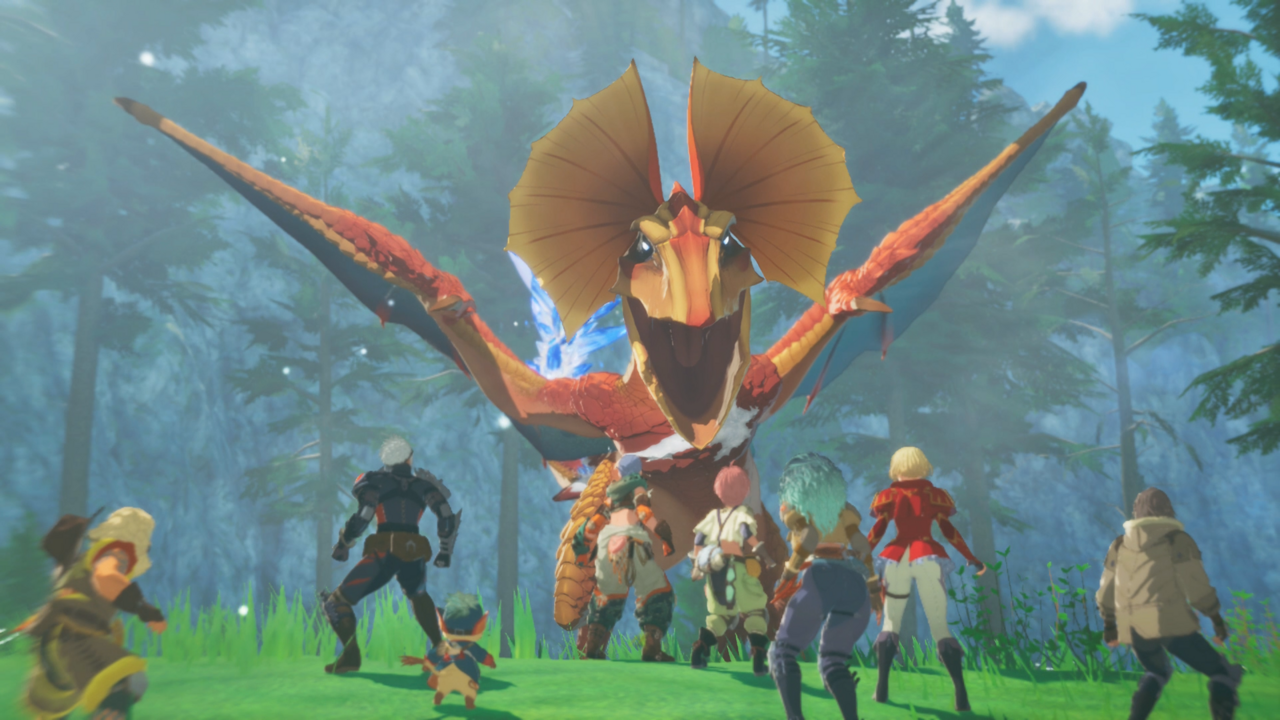
The story begins in Azuria, a prosperous kingdom on the edge of war with its neighboring nation, Vermeil. Players take on the role of the prince or princess of Azuria, who sets out with a party to uncover the root of the growing conflict between the two nations.
What makes the setup work is that the game avoids turning Vermeil into a simple villain nation. Its people are suffering from a dangerous phenomenon called the Encroachment, a spreading crystallization that is destroying their homeland. This makes the conflict more complicated than a standard good-versus-evil story. Both sides have fears, motives, and people worth protecting.
That moral gray area gives the narrative more weight. The player is not simply trying to defeat an enemy kingdom. They are trying to understand a crisis before it becomes a full war.
Princess Eleanor Gives Vermeil a Human Face
One of the strongest characters in the story is Princess Eleanor of Vermeil. In an attempt to prevent war, she voluntarily places herself in Azurian custody, giving the party time to investigate the Encroachment and search for another solution.
Eleanor is important because she humanizes Vermeil. Although players do not directly explore her homeland, she describes it through memories, culture, and food. That detail is especially fitting for Monster Hunter, a series where meals have always been part of the experience. Here, food becomes a storytelling tool that helps players imagine a nation they never visit.
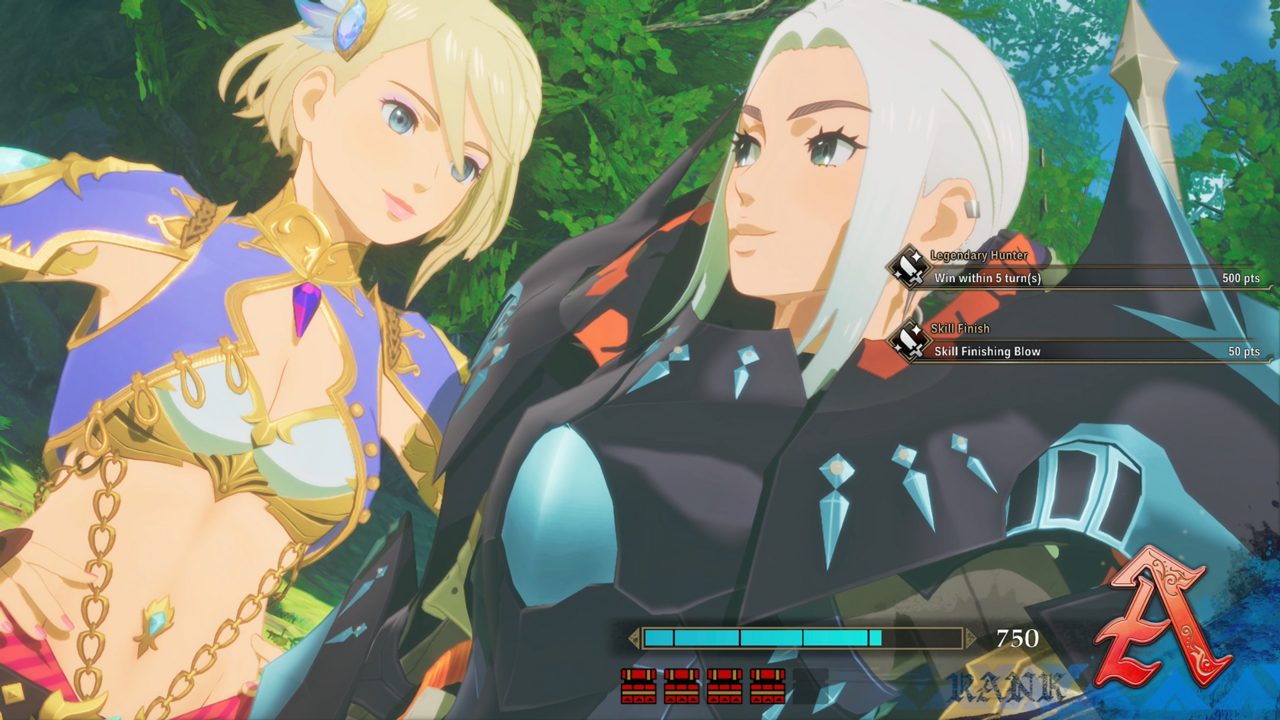
The supporting cast also adds emotional texture. Kora, a stylish ranger dealing with grief, and Thea, a young ranger trying to prove herself, both receive meaningful character arcs. Even the Palico companion is tested throughout the adventure. Some storylines are stronger than others, but the cast gives the journey warmth and personality.
The Story Builds Toward an Excellent Final Act
Monster Hunter Stories 3 places a much stronger emphasis on narrative than some players may expect. The game includes emotional character moments, major revelations, and several exciting scenes that make the adventure feel grander than a typical monster-taming RPG.
The ending is especially strong. After slowly building its political conflict, ecological crisis, and character relationships, the final act delivers a dramatic payoff filled with energy and emotion. The game may not be as philosophically complex as some modern RPGs, but it knows how to deliver memorable, crowd-pleasing moments.
That said, the pacing is not perfect. Party-member side stories are enjoyable on their own, but they are often dropped into the middle of chapters in large batches. Completing several optional quests in a row can slow the main story just as it starts to gain momentum. Ignoring them is possible, but doing so may leave party members at a disadvantage.
Turn-Based Combat Captures the Monster Hunter Spirit
The combat is where Monster Hunter Stories 3 truly shines. Capcom has successfully translated Monster Hunter’s core ideas into a turn-based system without losing the feeling of fighting dangerous creatures.
Monster battles are often long, multi-stage encounters that reward preparation and careful decision-making. Players must consider monster attack patterns, elemental weaknesses, weapon types, stamina management, and which body parts to target. Different parts may be weak to different weapons, and choosing the wrong approach can waste valuable turns.
This gives battles a satisfying rhythm. They are not just about selecting the strongest attack every turn. You need to read the monster, predict its behavior, manage your resources, and use your Monsties effectively.
When the system works, it feels like a smart RPG version of traditional Monster Hunter. You are still studying monsters and adapting to them, only now through turn-based strategy rather than real-time action.
Feral Monsters Add Real Challenge
Some of the best battles in the game come from Feral Monsters, creatures affected by the Encroachment. These monsters are stronger than normal and often require different strategies.
Attacking certain parts of a Feral Monster can trigger powerful retaliation attacks, sometimes strong enough to knock out a party member instantly. This forces players to rethink their approach. You may need to change weapons, adjust your party, train a different Monstie, or avoid targeting specific parts until the right moment.
Many Feral Monster fights are optional, but they are worth seeking out. Defeating them can unlock regional base camps, giving players access to cooking, party management, and Habitat Restoration systems. These fights also make the world feel more dangerous and alive.
The only major issue is companion AI. Party members sometimes attack dangerous monster parts that trigger retaliation, even when the player would clearly avoid doing so. These mistakes are rarely enough to ruin a fight entirely, but they can be frustrating in difficult encounters.
Monstie Collection and Customization Are Deep and Rewarding
Collecting and training monsters, called Monsties, is a major part of the game’s appeal. Players can bring up to six Monsties into battle, each with its own strengths, weaknesses, abilities, and potential role.
The customization system is surprisingly deep. Each Monstie has nine gene slots that can hold attacks, passive abilities, elemental resistances, and other useful traits. Matching genes by type or element can unlock bonuses, allowing players to build stronger and more specialized companions.
This means two Monsties of the same species can serve completely different purposes depending on their genes. One might become a heavy elemental attacker, while another could be built for defense, support, or status effects.
The system gives players an enormous amount of control. If you enjoy team-building and optimization, there is plenty to experiment with. The downside is that the Rite of Channeling, the process used to transfer genes, can feel slow and clunky when managing large numbers of Monsties. Swapping one or two genes is fine, but building multiple Monsties from scratch can become tedious.
Habitat Restoration Is the Game’s Best New Idea
The most inventive system in Monster Hunter Stories 3 is Habitat Restoration. By releasing monsters back into the wild, players can improve the ecosystems of different regions. Releasing native Monsties increases that species’ rank in the region, which improves the chances of finding stronger versions with rare genes, alternate colors, and additional traits.
This system gives collecting duplicate Monsties a real purpose. Instead of simply discarding extras, players can use them to strengthen the world around them. Better habitats lead to better eggs, which lead to stronger Monsties, which then improve combat and exploration.
You can also release non-native Monsties into a region, allowing new species to appear there and take on regional traits. This gives each player’s world a sense of personal identity. Your version of a region may contain different species than someone else’s, creating unique opportunities for egg hunting and team building.
Habitat Restoration also introduces endangered species and Invasive Monsters. These encounters play more like combat puzzles than normal fights, asking players to gather clues and use specific attacks or actions to drive invasive monsters away. The reward is the chance to collect endangered eggs and help restore threatened species to the environment.
It is a clever and surprisingly wholesome system that fits Monster Hunter’s themes of ecology and coexistence better than almost anything the series has done before.
Exploration Keeps the Loop Addictive
The gameplay loop is excellent. Players explore regions, battle monsters, gather eggs, restore habitats, improve Monsties, craft gear, complete quests, and then return to the field stronger than before. Every system feeds into another.
Restoring habitats can lead to better eggs. Better eggs provide stronger genes. Stronger Monsties make tough battles easier. Tougher monsters provide materials for better weapons and armor. This creates a loop that is always moving forward.
Even without the story, there is enough here to keep players busy for many hours. Raiding dens, hunting Feral Monsters, chasing rare eggs, and fine-tuning Monstie builds can easily become the main attraction.
Grinding and Onboarding Hold It Back Slightly
Monster Hunter Stories 3 is packed with mechanics, and the game does not always explain them clearly. Some systems, such as double attacks, Kinship gauge management, and dual-type Monsties, can be confusing even after several hours. Tooltips help, but they do not cover every detail players may want to understand.
The game also minimizes grinding well for most of the adventure, but the final stretch becomes more demanding. The last few hours throw several tough monsters at the player, and leveling up may become necessary. Grinding is not unusual in RPGs, but it can hurt the pacing when the story is approaching its climax.
These issues do not ruin the game, but they are noticeable. Better tutorials and smoother late-game balancing would have made the experience even stronger.
Final Verdict: One of the Best Monster Hunter RPGs Yet
Monster Hunter Stories 3: Twisted Reflection is a fantastic RPG that proves the Stories subseries can stand shoulder to shoulder with the mainline Monster Hunter games. It combines strategic turn-based combat, deep Monstie customization, rewarding exploration, strong storytelling, and one of the best new systems in the franchise with Habitat Restoration.
The game has flaws. Some mechanics need better explanations, the Rite of Channeling can be tedious, companion AI occasionally makes poor decisions, and late-game grinding slows the finale. But these problems are outweighed by the strength of the overall experience.
If you enjoy Monster Hunter, turn-based RPGs, monster-taming games, or deep team-building systems, Monster Hunter Stories 3 is easy to recommend. It is ambitious, emotional, and addictive in the best way.
Monster Hunter Stories 3 FAQ
What kind of game is Monster Hunter Stories 3?
Monster Hunter Stories 3: Twisted Reflection is a turn-based RPG and monster-taming adventure set in the Monster Hunter universe.
Do you need to play the previous Monster Hunter Stories games first?
No. The story is easy to follow without playing previous entries, though returning fans may appreciate some familiar ideas and systems.
What are Monsties?
Monsties are monsters that players hatch, train, customize, and bring into battle as companions.
What is Habitat Restoration?
Habitat Restoration is a system that lets players release Monsties into regions to improve ecosystems, unlock stronger eggs, restore endangered species, and influence which monsters appear in the wild.
Is Monster Hunter Stories 3 worth playing?
Yes. It is one of the strongest Monster Hunter RPGs, offering excellent combat, deep customization, rewarding exploration, and a powerful story.