God of War: Sons of Sparta Review – Teen Kratos Brings Mythic Mayhem and Mild Laughs
God of War: Sons of Sparta Review – A Flawed Metroidvania With Strong Combat and an Uneven Identity
God of War: Sons of Sparta is an interesting but uneven spin-off that tries to take the God of War series in a very different direction. Instead of the massive cinematic set pieces, brutal spectacle, and mythological scale that usually define the franchise, this prequel reimagines young Kratos and Deimos inside a side-scrolling metroidvania structure.
That idea has potential. A younger Kratos learning what duty, leadership, and loyalty truly mean could make for a compelling story. A God of War metroidvania could also work if the exploration, upgrades, combat, and world design all connected smoothly. Unfortunately, Sons of Sparta struggles to fully commit to either identity. It is not spectacular enough to feel like a traditional God of War game, and it is not flexible or inventive enough to stand among the stronger modern metroidvanias.
There are good ideas here. The combat grows more satisfying as new abilities unlock, the art style can be beautiful, and the story eventually finds emotional weight. But too much of the experience feels stiff, repetitive, and awkwardly paced. God of War: Sons of Sparta is not a disaster, but it is a spin-off that never fully escapes its identity crisis.
A Prequel Focused on Young Kratos and Deimos
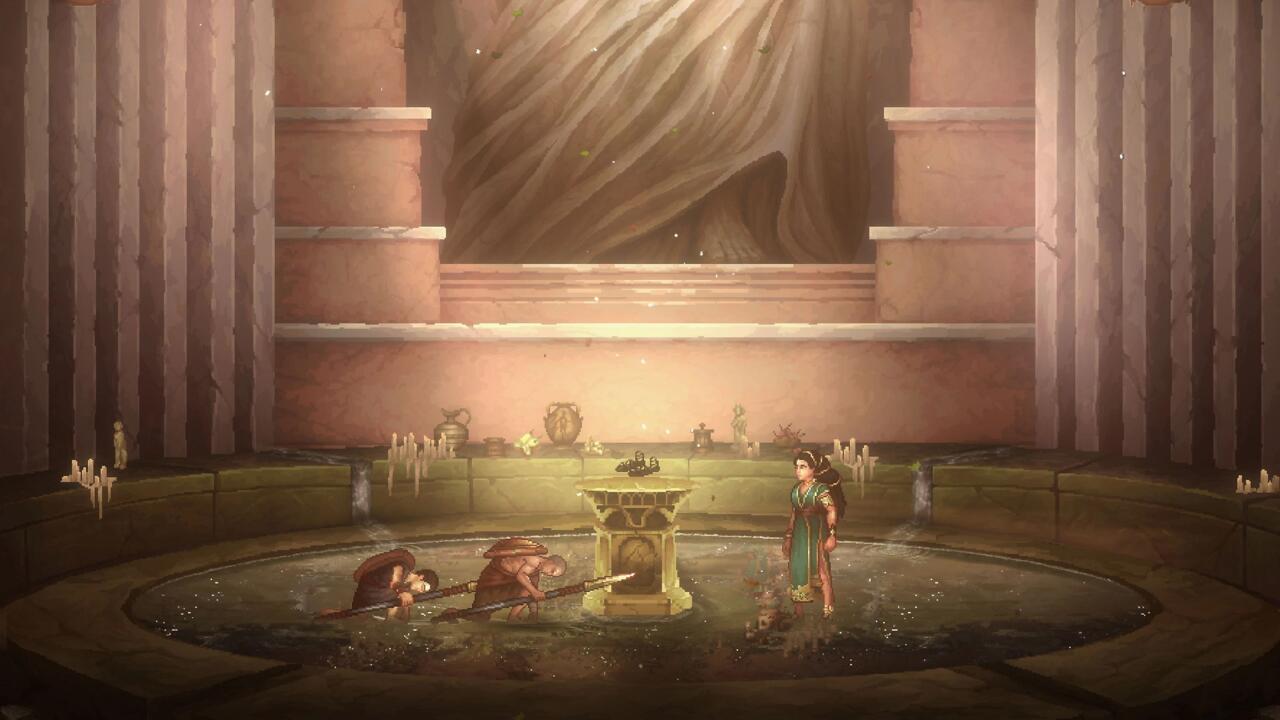
Sons of Sparta takes place across two points in the God of War timeline. In the framing story, an older Kratos tells his daughter Calliope about an adventure from his youth, before the tragic events that would eventually turn him into the Ghost of Sparta. The main story follows teenage Kratos and his brother Deimos as they begin proving themselves in the Spartan army.
The setup explores a foundational period in Kratos’ life. He is not yet the rage-driven figure players know from the mainline games. Instead, he is a young warrior trying to follow Spartan rules, honor his duties, and live up to the expectations placed on him. Deimos, by contrast, feels looser and more rebellious, creating tension between the brothers.
The story begins with Kratos and Deimos searching for a missing teenager named Vasilis. Along the way, they encounter mythical creatures, cultists, and dangers tied to Spartan trials. The premise is straightforward, and at first it lacks urgency. Much of the early story involves following clues, arriving too late, and moving on to the next location. It can feel more like a simple chase than a dramatic God of War narrative.
However, the story improves in its later sections. As Kratos begins questioning what duty really means, he becomes more interesting. The game eventually explores leadership, conscience, community, and the difference between blindly following rules and protecting people. These themes give the ending more emotional weight than the early hours suggest.
The Metroidvania Design Feels Too Rigid
Exploration is the core of any good metroidvania, and this is where Sons of Sparta struggles most. The game gives Kratos new abilities through boons from the gods, but many of these tools are extremely specific. Instead of opening the world in flexible and exciting ways, they often function as color-coded keys.
A certain obstacle may require a specific projectile. A plant may need one type of shot. A mechanism may need another. Bushes may require fire. In theory, this creates ability-based progression. In practice, it often feels rigid. When you see a certain object, there is usually only one correct tool to use, and the solution is obvious.
This limits the sense of discovery. Great metroidvanias make new abilities feel empowering because they change how you understand the world. In Sons of Sparta, many upgrades simply allow you to interact with one more type of obstacle. That makes exploration feel more mechanical than exciting.
Movement Is Stiff and Often Frustrating
Movement is another major problem. Even as a teenager, Kratos feels heavy and awkward to control. His basic movement is slow, and rolling often becomes the fastest way to travel through environments. Eventually, you unlock a dash and double jump, but they do not combine as smoothly as expected.
For example, dashing into a jump does not allow you to flow naturally into a double jump. Instead, it creates a long leap that is useful only in specific situations. This kind of restriction makes movement feel less fluid than it should. In a genre where traversal is supposed to become more satisfying over time, Sons of Sparta often feels clunky.
Fast travel also arrives far too late. After spending most of the game backtracking through large areas, players finally unlock a system that makes navigation easier near the end of the story. It helps with cleanup and resource farming, but it does not solve the pacing issues that come before it.
The game also introduces a useful photo-marker system, similar to the one in Prince of Persia: The Lost Crown, but again, it appears too late. By the time it becomes available, players may have already missed several opportunities where it would have been helpful.
Combat Is the Game’s Strongest System
While exploration is uneven, combat is much more successful. Kratos fights with a spear throughout the game, using basic attacks, parries, dodges, and unlockable techniques. Early combat feels simple, but it becomes more layered as new divine boons are added.
Each boon has a combat use, which helps make magic feel like part of Kratos’ toolkit rather than a limited emergency resource. Since the magic meter can be refilled frequently, the game encourages players to use abilities often. This gives fights more variety as the adventure continues.
Rooms are frequently packed with enemies, and the game clearly wants players to engage rather than simply run past everything. Fighting earns materials for upgrades, so combat becomes part of the progression loop. When everything clicks, Sons of Sparta offers a satisfying mix of melee attacks, magic, parries, and positioning.
The Healing Flask Is a Clever Idea
One of the game’s best original mechanics is its healing flask. Instead of pressing a button to instantly heal, Kratos drinks from the flask for as long as the player holds the input. This means healing becomes a risk-reward decision.
You may only have time for a small sip during a dangerous fight, or you may try to find a safe opening for a longer recovery. This adds tension to combat because healing is not automatic or completely safe. It is a small feature, but it is one of the most creative systems in the game.
Upgrades Offer Real Customization
The upgrade system gives players several ways to shape Kratos’ build. The spear has multiple parts that can be swapped and upgraded, changing attributes, reach, or moves. The shield can also be improved, and divine boons can be strengthened through special offerings.
Challenge rooms marked by olive trees reward players with specific olives that can be offered at temples to improve powers, increase health, or expand the magic meter. These optional challenges help break up exploration and provide meaningful rewards.
This customization gives the game more depth. Players can improve weaknesses, lean into preferred combat styles, or prioritize abilities that fit how they play. For example, increasing spear reach early can make combat feel much more manageable.
Combat Still Has Problems
Despite its strengths, combat is not perfect. The biggest issue is that enemy hits often feel more impactful than Kratos’ attacks. Enemies can knock you back or interrupt you, while many of your attacks simply drain health bars without visibly affecting them.
This makes fights feel uneven. You are forced to carefully manage positioning, timing, and defense, while enemies often behave like immovable targets. Boss fights highlight this problem even more. Many bosses are large mythical creatures, but they do not always feel as memorable or mechanically exciting as monsters from the main God of War series.
Deimos occasionally joins certain fights, but his presence can be more distracting than helpful. Because he looks similar on screen, it can sometimes be confusing to track your own character during chaotic moments.
The Visual Style Is Often Beautiful
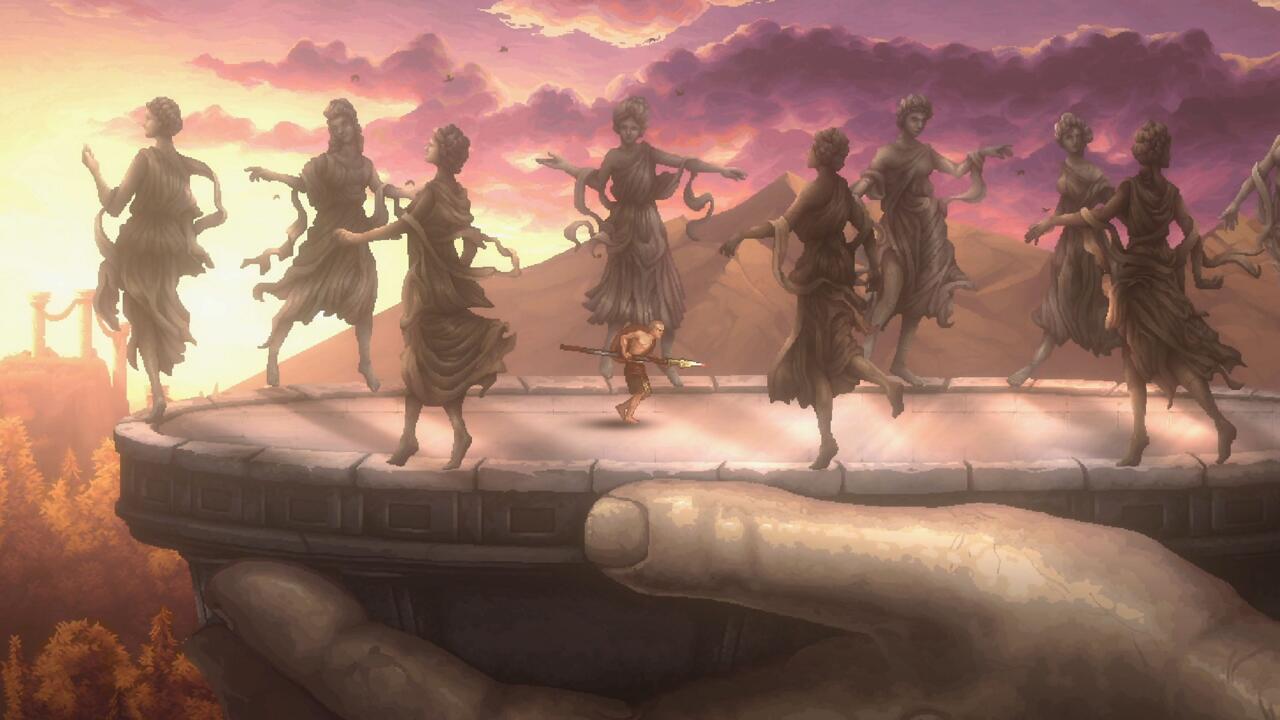
God of War: Sons of Sparta uses a faux-pixel-art style that generally works well. The animation is a little too smooth to feel like true pixel art, but the game still creates a strong visual identity. Backgrounds are often painterly and atmospheric, giving locations a sense of scale and mythic beauty.
Some larger enemies look like separate parts being moved like puppets, which can break the illusion slightly. Still, the overall presentation is one of the game’s better qualities. It gives the spin-off a distinct look while preserving enough mythological atmosphere to feel connected to God of War.
Some Areas Hurt the Pacing
The weakest sections of Sons of Sparta are the ones that slow movement even further. A late-game frozen wasteland is especially frustrating. Players must light pyres to move normally, and outside those warm areas, Kratos becomes painfully slow.
The idea may fit the environment, but the execution makes the area feel like a chore. Moving through molasses just to reach the next pyre is not tense or interesting; it is simply tedious. Sections like this make the game’s existing traversal issues more noticeable.
Final Verdict: A Decent Spin-Off That Falls Short
God of War: Sons of Sparta has enough good ideas to be interesting, but not enough polish or originality to be great. Its combat system is smart, especially once magic and upgrades expand Kratos’ options. The healing flask is a clever mechanic, the art style can be striking, and the story eventually finds a meaningful emotional core.
Unfortunately, the metroidvania design is too stiff. Exploration relies heavily on rigid obstacle solutions, movement feels clunky, fast travel arrives too late, and some areas slow the pacing to a crawl. The game also lacks the massive spectacle that usually defines God of War, leaving it caught between two identities.
Fans of Kratos and Deimos may appreciate the story’s later moments, and players who enjoy combat-focused metroidvanias may find some value here. But as a whole, Sons of Sparta is a flawed experiment. It is playable, occasionally engaging, and sometimes beautiful, but it never fully becomes the God of War metroidvania it could have been.
God of War: Sons of Sparta FAQ
What kind of game is God of War: Sons of Sparta?
God of War: Sons of Sparta is a side-scrolling metroidvania spin-off and prequel focused on young Kratos and Deimos during their early years in Sparta.
Is God of War: Sons of Sparta part of the main story?
The game explores a formative period in Kratos’ life, but its story feels more like a side chapter than an essential part of the main God of War canon.
Do you play as both Kratos and Deimos?
The main playable character is young Kratos, though Deimos appears in the story and joins certain combat encounters as an AI partner.
Is Sons of Sparta a good metroidvania?
It has some good ideas, but its exploration and movement systems are too rigid to stand among the best metroidvania games.
Is God of War: Sons of Sparta worth playing?
It may be worth playing for dedicated God of War fans or players interested in combat-focused spin-offs, but it is not one of the stronger entries in the franchise.