Battlefield Movie Bidding War Heats Up as Hollywood Chases the Next Big Military Action Franchise
Meta Description: The Battlefield movie is reportedly the subject of a major Hollywood bidding war, with five studios competing for a package involving Christopher McQuarrie and Michael B. Jordan.
The Battlefield movie is quickly becoming one of Hollywood’s most-watched video game adaptation projects. After years of rumors about a possible Battlefield film or TV series, the franchise now appears to be attracting major studio interest, with multiple companies reportedly bidding for the rights to a high-profile movie package.
According to reports, Warner Bros. Discovery, Amazon MGM Studios, Sony, Universal, and Netflix have submitted bids. The project is especially attractive because Christopher McQuarrie is reportedly set to write and direct, while Oscar-winner Michael B. Jordan is attached as a producer and may also star.
With that kind of talent involved, Battlefield is no longer just another game adaptation idea. It is a potential blockbuster package that studios may see as the next major military action franchise.
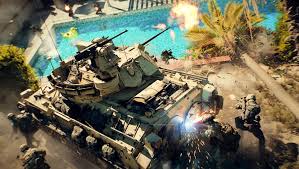
Battlefield Has Been Waiting for the Right Moment
Talk of a Battlefield adaptation has existed for more than a decade. The franchise has always seemed like a natural fit for film or television because of its cinematic scale, military action, and explosive set pieces. However, earlier attempts never fully came together.
The timing is different now. Video game adaptations are no longer treated as low-priority experiments. They are major business opportunities. Studios have watched game-based films earn huge box office numbers, and now they are searching for the next franchise that can move from console screens to movie theaters.
Battlefield may be arriving at the perfect moment. It has name recognition, recent game momentum, and a built-in identity that can translate to large-scale action.
What Makes Battlefield Different From Other Shooter Adaptations?
Battlefield is not just another first-person shooter brand. Its identity is built around scale. The games are famous for combined-arms warfare, where infantry, tanks, aircraft, helicopters, vehicles, and destructible environments all collide at once.
That gives the movie a clear advantage. A Battlefield film can offer something bigger than a standard military thriller. It can show chaotic battlefields where the environment changes, missions collapse, vehicles become weapons, and soldiers must adapt in real time.
That sense of scale is what separates Battlefield from other military franchises. The movie should not simply be about soldiers shooting through corridors. It should feel like a war zone where every direction is dangerous.
Christopher McQuarrie Brings Action Prestige
Christopher McQuarrie’s reported attachment immediately raises expectations. His work on the Mission: Impossible films has shown that he understands action as more than noise. His best sequences are built around clear objectives, rising tension, physical danger, and precise staging.
Those qualities could make Battlefield work as a movie. The games are chaotic, but their best moments often come from emergent stories: a last-second vehicle escape, a collapsing building, a desperate revive, or a squad holding an objective against impossible odds.
A filmmaker like McQuarrie could translate that feeling into cinema by building set pieces around tactical goals. Instead of random explosions, the movie could focus on missions where each action beat changes the situation.
Michael B. Jordan Could Elevate the Project
Michael B. Jordan’s involvement gives Battlefield star power and production credibility. As an actor, Jordan can carry physical action and emotional intensity. As a producer, he can help shape the project into something more character-driven than a basic war spectacle.
That is important because Battlefield cannot survive on scale alone. A movie audience needs characters to follow. The film needs a squad dynamic, personal stakes, and moral pressure. Jordan could help ground the movie in human emotion while the larger battle unfolds around him.
If he stars, the film may be built around a soldier, commander, specialist, or operative caught inside a rapidly escalating conflict. That could give the movie a strong central identity while still preserving Battlefield’s ensemble feeling.
The Five Studios and What They Offer
Each reported bidder could take Battlefield in a slightly different direction.
Warner Bros. Discovery could position the film as a big theatrical action event, especially if it wants more large-scale franchise material. Universal has global blockbuster experience and could market Battlefield as a major international action release.
Sony has a strong interest in game adaptations and understands the value of gaming audiences. Amazon MGM has the financial power to compete aggressively and could support a theatrical release before moving the film to Prime Video. Netflix could offer major money and global streaming reach, though a traditional theatrical release may be a sticking point.
The winning studio will likely be the one that offers the best combination of money, theatrical commitment, creative freedom, and franchise potential.
Why Theatrical Release Matters
Reports suggest the filmmakers are interested in a theatrical release. That makes sense. Battlefield’s biggest selling point is scale, and scale plays best on a massive screen with powerful sound.
A streaming release could reach a huge audience, but a theatrical release would make Battlefield feel like an event. For a franchise built on explosions, vehicles, destruction, and massive combat, the cinema experience could be a major advantage.
This may make Netflix a less likely destination unless it offers a strong theatrical strategy. Meanwhile, studios with established theatrical pipelines may have an edge.
How Battlefield Could Compete With Call of Duty
The Battlefield movie is developing at a time when Paramount reportedly has a Call of Duty movie on the way. That creates a fascinating rivalry. In gaming, Battlefield and Call of Duty have long represented different approaches to military shooters. Bringing both to theaters could extend that rivalry into film.
Battlefield should not try to copy Call of Duty. Instead, it should lean into what makes it unique: larger battles, squad teamwork, vehicles, environmental destruction, and the feeling of being one small part of a much bigger war.
If the film captures that identity, it can stand apart from other military action movies and avoid feeling interchangeable.
Why Battlefield 6 Strengthens the Movie Case
The recent success of Battlefield 6 gives the movie additional momentum. As the newest entry in the franchise, the game reportedly performed exceptionally well and became a top-selling title in the United States.
That matters because Hollywood wants active franchises. A popular new game means players are already engaged, the brand is fresh in public conversation, and marketing teams can connect the film to current gaming excitement.
Battlefield 6 also proves that the franchise still has a large fanbase. That fanbase could become the first audience for the movie, while the action premise could bring in general moviegoers.
What the Movie Needs to Avoid
The biggest danger is becoming generic. A Battlefield movie cannot simply be another military action film with the franchise name attached. It needs moments that feel unmistakably Battlefield.
That means large combat spaces, tactical teamwork, vehicles used creatively, destructible environments, and unpredictable battlefield shifts. It also needs strong sound design, clear mission stakes, and characters who feel human rather than one-dimensional soldiers.
The movie should also avoid trying to recreate multiplayer too literally. Watching people capture objectives for two hours would not work. Instead, the film should translate the feeling of Battlefield into a cinematic story.
Final Thoughts
The reported bidding war for the Battlefield movie proves that Hollywood sees major value in gaming IP. With five studios reportedly competing and talent like Christopher McQuarrie and Michael B. Jordan attached, the project has the ingredients to become a major action event.
The key will be execution. Battlefield has the scale, brand recognition, and cinematic identity needed for a blockbuster. But the movie must deliver more than explosions. It needs tension, characters, tactical action, and the massive combined-arms chaos that made the games famous.
If the right studio wins and gives the creative team room to build something bold, Battlefield could become Hollywood’s next major video game adaptation success — and possibly the start of a new military action franchise.