
Critical Role Campaign 4: The Game Master’s Hand and the High Cost of Mortality in D&D








Popular Now
 CarX Street
 Call of Duty
 FIFA 23
 NBA 2K24
 God of War Ragnarök
 Fortnite
 Black Myth: Wukong
 Auto X Drift Racing 3
 Garena Free Fire: Kalahari
 League of Legends
 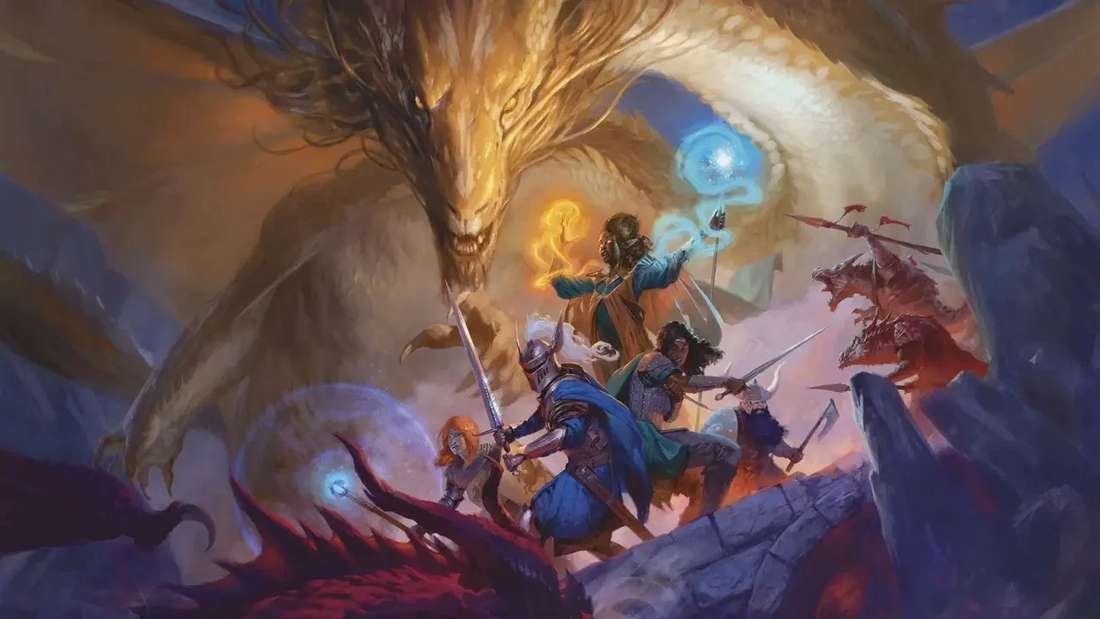 The highly anticipated launch of Critical Role Campaign 4 (CR C4) has not only introduced a new setting, Aramán, and a rotating, expanded cast of players, but it has also signaled a fundamental shift in the stakes of the game. Under the new stewardship of Dungeon Master (DM) Brennan Lee Mulligan (BLM), the campaign is poised to make player character (PC) death a truly meaningful, and potentially permanent, prospect, breathing fresh tension and high-stakes drama into the beloved Dungeons & Dragons (D&D) format. This re-evaluation of mortality is a crucial move for both narrative integrity and mechanical engagement, elevating CR C4 as a must-watch for fans of Actual Play TTRPGs and those looking for a more visceral D&D experience.
The new campaign, which premiered in early October 2025, immediately established a somber, high-pressure tone with the public execution of the character Thjazi Fang—an event that serves as the nexus for the disparate initial cast members. This opening gambit is more than just a plot hook; it’s a thematic declaration. In a world reeling from the death of the Gods seventy years prior, the implications for life, death, and the afterlife are profound. This loss of divine intervention directly impacts one of D&D’s most notorious narrative safety nets: the ease of Resurrection spells.
 The Critical Role Death Dilemma: Why Resurrections Must Be Meaningful
 The Critical Role Death Dilemma: Why Resurrections Must Be Meaningful
For years, a central critique of high-level D&D campaigns—including past Critical Role installments—has been the relative triviality of death. Once players gain access to spells like Revivify (low cost, 1 minute time limit), Raise Dead, and Resurrection, a character’s “death” often becomes a temporary setback, a brief medical emergency quickly solved by gold and spell slots. This “whack-a-mole” approach diminishes the tension of combat and the weight of character choices, leading to a phenomenon where high-risk, high-reward scenarios lose their bite. This is a significant factor in the perceived CPC of campaign narrative. If the players know a powerful character is essentially insured, the dramatic investment wanes.
BLM, a master of dramatic stakes, appears to be actively countering this trend by leveraging the campaign’s core lore. The absence of the Gods in Aramán could mean:
- Significantly Increased Material Cost: The components required for high-level spells like Resurrection are astronomical. Without divine favour, the market for rare, soul-binding materials could be severely inflated, presenting a daunting economic challenge to recovery.
- The Broken Chain of the Afterlife: With the Gods gone, the very mechanism of the afterlife—where souls are shepherded—may be fractured. A soul might be harder to locate, retrieve, or even be irretrievably lost to chaotic, emerging planar entities. This would introduce unique and terrifying quest lines centered not on combat, but on soul retrieval contracts.
- Permanent Negative Effects: Even if a PC is brought back, the process could inflict long-term consequences, such as levels of Exhaustion, reduced maximum Hit Points, or even psychic trauma that mechanically impacts their abilities. This aligns with a darker, more serious tone and pushes the players toward more tactical, risk-averse gameplay—a fascinating development for this high-octane group.
Strategic Shifts and High-Value Keywords in Aramán
Campaign 4 is also experimenting with a West Marches-style format, dividing the 13-strong cast into three initial adventuring parties: the Soldiers, the Seekers, and the Schemers. This structure fundamentally raises the stakes on mortality. If a PC dies in a four-person group, that party loses a quarter of its immediate operational capacity, and the player is benched, potentially for weeks, awaiting the introduction of a new character. This is a far cry from a full table where a single death is more easily absorbed.
Strong Focus Keywords for SEO/CPC:
- Critical Role Campaign 4 Death Mechanics
- D&D 5e High-Stakes Gameplay
- Brennan Lee Mulligan DM Style
- Permanent Character Death TTRPG
- Actual Play Dungeons & Dragons
- Wizards of the Coast D&D Rules
This increased danger forces the players—and the audience—to truly invest in the concept of loss. Every decision, from choosing to engage in a confrontation to selecting a high-quality defensive magic item, carries the palpable risk of a permanent farewell. This approach transforms a simple Death Save from a routine d20 roll into a moment of genuine, heart-stopping drama, maximizing the emotional ROI (Return on Investment) for the viewer.
The Future of D&D Mortality: A Masterclass in Narrative Design
In conclusion, Critical Role Campaign 4 is setting a new precedent for mortality in long-form, high-profile TTRPG campaigns. By anchoring the difficulty of resurrection within the campaign’s central lore—the death of the Gods in Aramán—DM Brennan Lee Mulligan is not just imposing a house rule; he is creating a world where life is precious and death is a final, terrifying consequence. This shift not only heightens the dramatic tension, ensuring a thrilling and unpredictable narrative, but also addresses a long-standing mechanical weakness in D&D’s high-level play. Fans are witnessing a masterclass in using world-building to enforce compelling, high-stakes gameplay, making Critical Role Campaign 4 one of the most significant evolutions in the actual play space and a testament to the fact that to make a character truly heroic, they must face a very real chance of losing everything.
Strong Takeaway: The commitment to making death a high-cost, world-altering event ensures that the moments of success and triumph will feel all the more earned, securing Campaign 4’s place as a groundbreaking and highly profitable narrative venture for the Critical Role studio.
Disclaimer: This analysis is based on the initial episodes and thematic declarations of Critical Role Campaign 4. As an expert SEO content creator, the author’s primary goal is to provide insightful commentary rich in relevant, high-traffic keywords, offering significant value-add content to the reader and optimizing for maximum organic search performance.