Resident Evil Requiem Review: A Twisted Horror Revival with Two Faces
Resident Evil Requiem Review: Capcom Blends Survival Horror and Action Better Than Ever
Resident Evil Requiem is a fascinating entry in Capcom’s long-running horror franchise because it does not try to solve the series’ old horror-versus-action debate in the usual way. Instead of blending both styles into one seamless campaign, it splits them apart. One half is slow, frightening, and resource-starved survival horror. The other is faster, louder, and closer to the intense action of Resident Evil 4.
That structure sounds risky, and at times it can feel uneven. However, it also allows Resident Evil Requiem to deliver two different kinds of tension without forcing either side to compromise too much. The result is a game that often feels like two Resident Evil experiences running in parallel: one starring new protagonist Grace Ashcroft, and the other bringing back Leon S. Kennedy for another dangerous mission tied to the series’ past.
Requiem does not completely reinvent Resident Evil. In fact, it leans heavily on ideas Capcom has already refined across Resident Evil 7, Resident Evil Village, the Resident Evil 2 remake, and Resident Evil 4. But when it works, it works extremely well. It is tense, gory, familiar, polished, and often thrilling.

Two Different Resident Evil Games in One
The biggest design decision in Resident Evil Requiem is its dual-protagonist structure. Grace Ashcroft’s sections are built around fear, scarcity, and vulnerability. Leon Kennedy’s sections focus more on action, crowd control, and chaotic enemy encounters. The game even recommends different camera perspectives depending on the character: first-person for Grace’s horror-heavy gameplay and third-person for Leon’s action sections.
This creates a clear contrast. Grace feels like a normal person trapped in a nightmare. Leon feels like a veteran survivor who knows how to fight, even when the odds are terrible. Switching between them can be jarring, especially early on, but the contrast helps keep the pacing fresh. When Grace’s sections become too stressful, Leon’s action offers a different kind of pressure. When Leon’s sections become too chaotic, Grace’s survival horror brings the dread back.
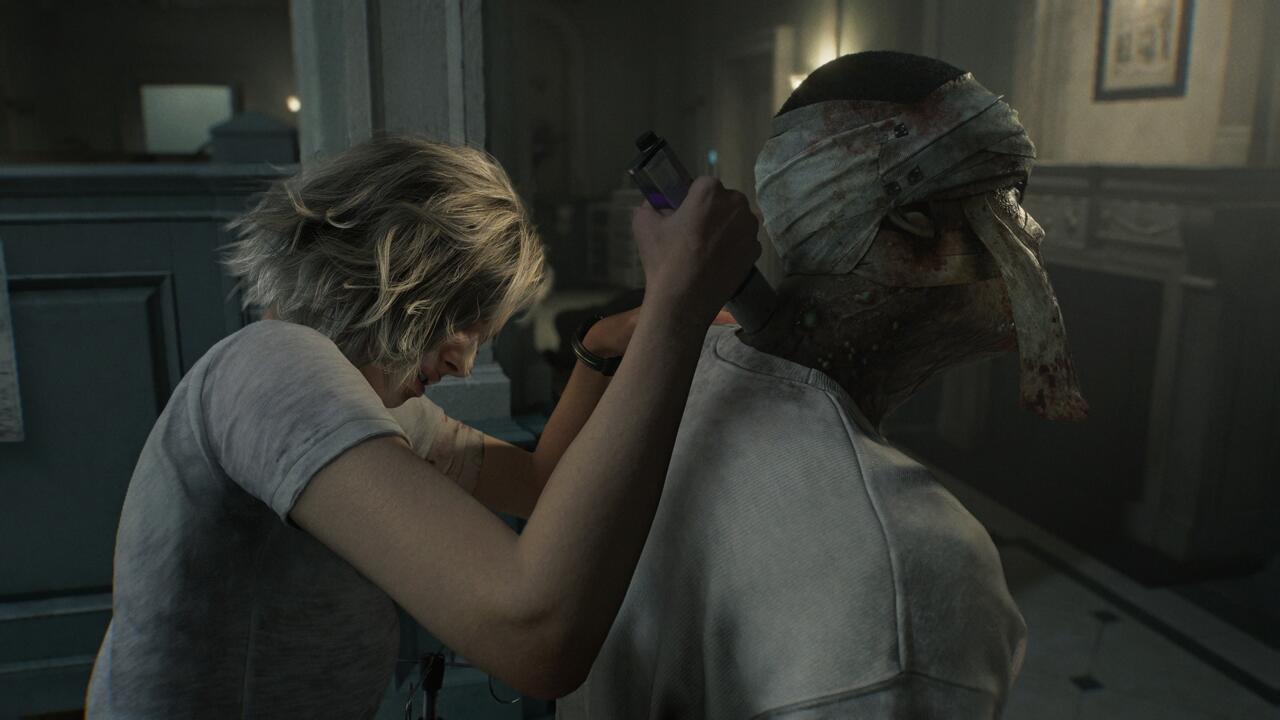
Grace Ashcroft Brings Back Pure Survival Horror
Grace Ashcroft is one of Requiem’s best additions. She is an FBI analyst, not a super soldier. She can use a weapon, but she is not built for constant combat. Her fear feels believable, and her limited training makes every encounter more dangerous.
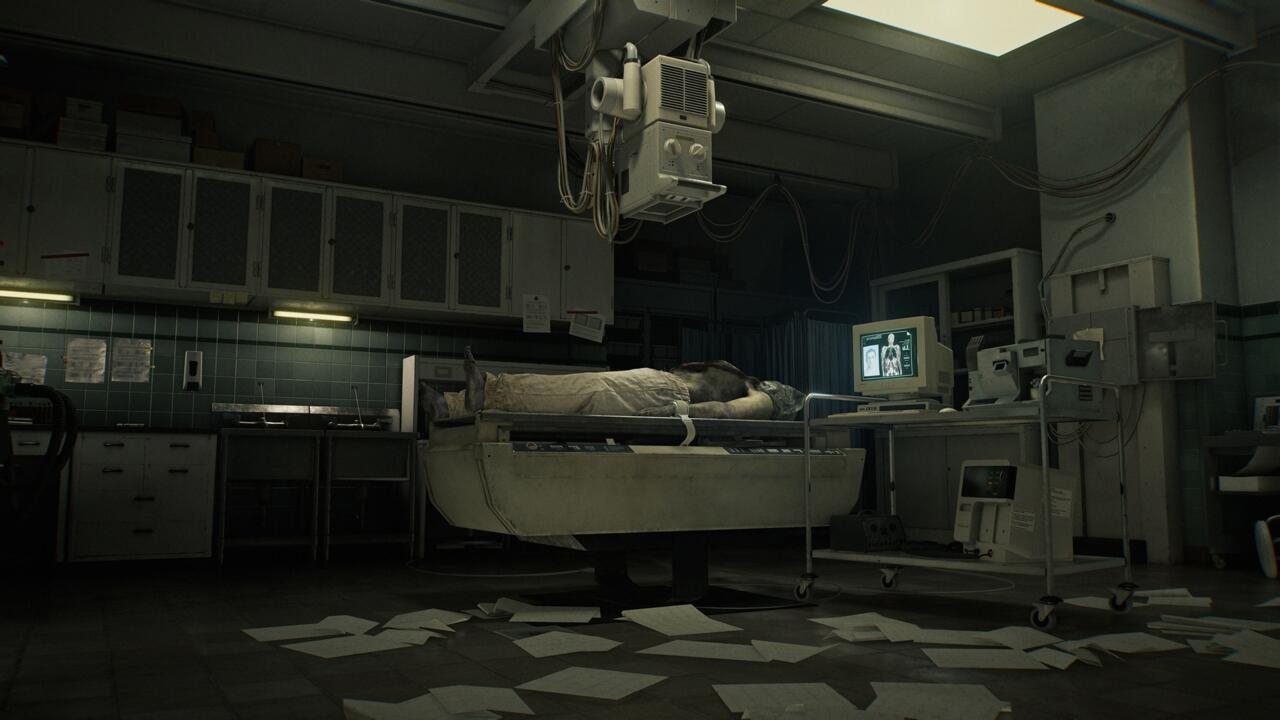
Her story begins with her trapped inside a hospital that also hides a secret viral research facility. This setup is classic Resident Evil: limited ammo, locked doors, medical horror, virus experiments, dark hallways, and enemies waiting around every corner. Grace must search for supplies, solve environmental problems, manage inventory space, and decide when to fight or flee.
Her vulnerability makes the hospital feel dangerous. She cannot simply clear every room without consequences. Every bullet matters, every corpse is suspicious, and every hallway can become a problem later. This is where Requiem is at its strongest.
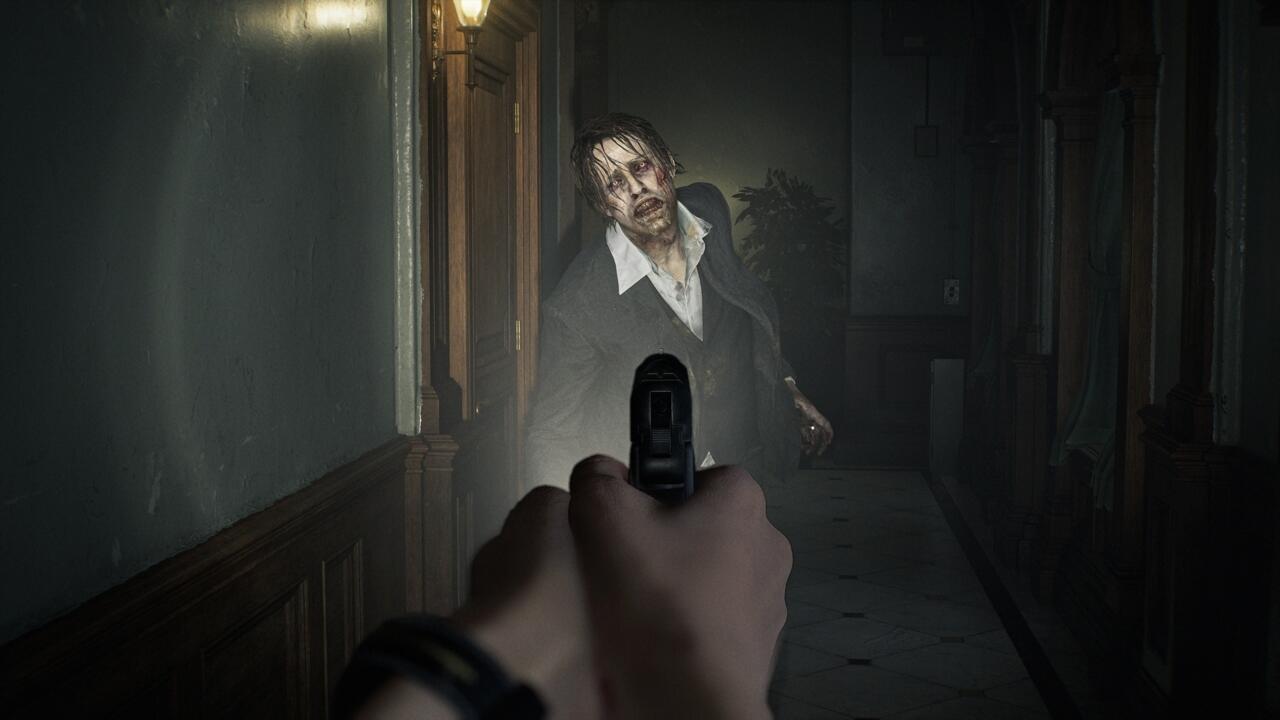
Zombies Feel More Disturbing and Unpredictable
Requiem’s zombies are familiar, but Capcom gives them enough new behavior to make them feel fresh. These T-virus-infected enemies retain traces of who they were before mutation. A zombie maid may continue cleaning. A zombie chef may still hack at meat in the kitchen. A zombie singer may continue trying to perform in a lounge.
These details do more than add atmosphere. They also affect gameplay. Zombies can fall into behavioral patterns that players can observe, avoid, or exploit. Some carry weapons and use them clumsily, making encounters less predictable. A zombie with a tool or blade may not fight well, but it can still become dangerous in close quarters.
This gives the undead more personality than usual. They are not just bodies shuffling toward the player. They are broken remains of people, trapped in routines that make the hospital feel more tragic and grotesque.
Blisterheads Make Every Corpse a Threat
The most effective enemy twist is the return of a crimson head-style idea through blisterheads. Some zombies that appear dead can later mutate into faster, stronger, and more aggressive versions. This changes how players think about every enemy they defeat.
Leaving a body behind is risky. Shooting a zombie may solve the immediate problem, but it may create a worse one later. As Grace revisits the same hallways, every corpse becomes a source of anxiety. Will it stay dead? Will it suddenly start shaking? Should you spend resources to eliminate it permanently?
This adds a smart layer to resource management. The game constantly pressures you to think ahead, not just react to the current threat.
Infected Blood Adds a Clever Crafting System
Grace eventually gains access to a crafting system built around infected blood. She can collect blood from gore-filled areas and certain enemy remains, then use it to craft valuable items. This turns horror set dressing into a practical resource, which is a clever touch.
The most interesting item is the hemolytic injector, a one-use tool that can destroy a zombie instantly. It can also be used on a corpse before it mutates into a blisterhead. That makes it extremely useful, but also expensive from a resource standpoint.
The same materials used for an injector may also be needed for bullets, save items on certain difficulties, or upgrades that make Grace more durable. This creates difficult choices. Do you craft ammo, protect yourself from future mutations, or invest in long-term survival?
Resident Evil is at its best when every item feels valuable, and Requiem understands that clearly.
Leon Kennedy Delivers the Action Half
Leon S. Kennedy’s sections are designed very differently. He is investigating events connected to Grace’s story, and his path eventually intersects with hers. Early in the game, Leon appears in short bursts, often when Requiem needs a boss fight or action-heavy sequence. Later, he receives more focus, especially during the return to Raccoon City.
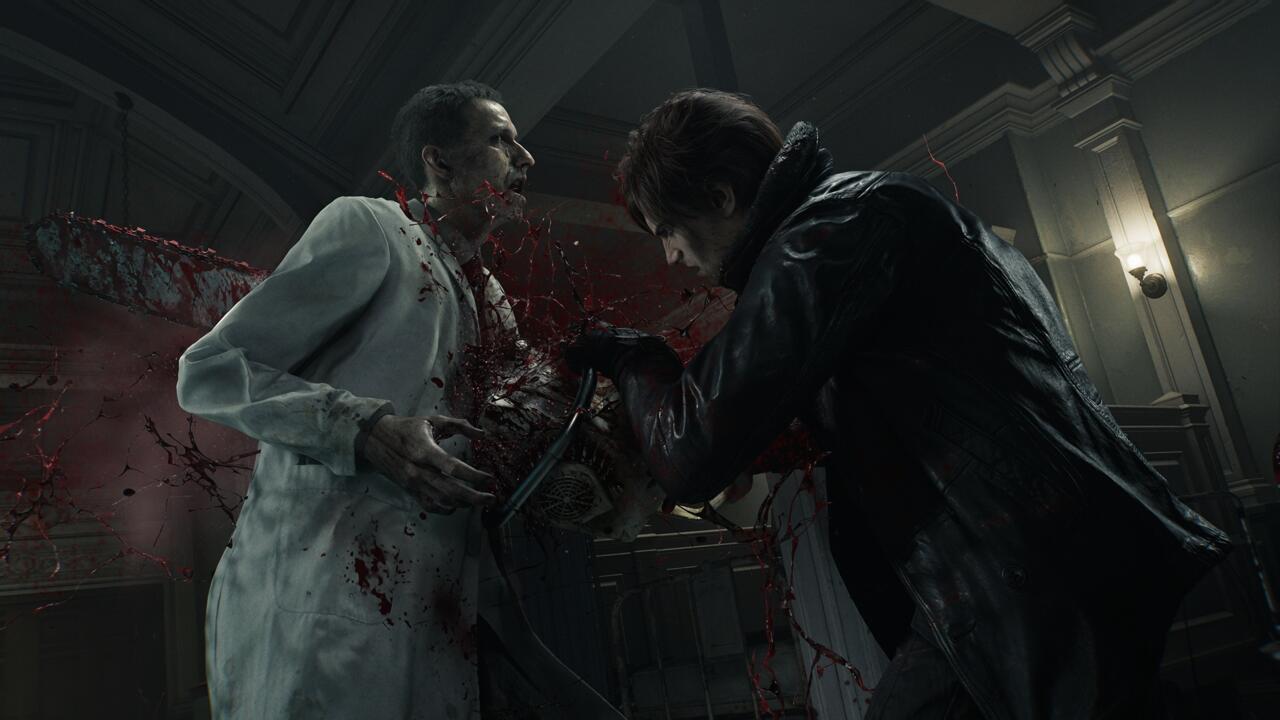
Leon’s gameplay draws heavily from Resident Evil 4. He faces aggressive enemy groups in tight spaces, scrambles for resources, and uses weapons creatively to survive. His sections are not relaxed power fantasy. They are frantic, messy, and often chaotic.
One of the best additions is how enemies interact with weapons and objects in the environment. A zombie carrying a chainsaw may lose it, only for the weapon to keep spinning dangerously on the floor. Another zombie may pick it up and accidentally cut through its own allies. These moments make encounters feel unpredictable and sometimes darkly funny.
The Hatchet Gives Leon More Combat Options
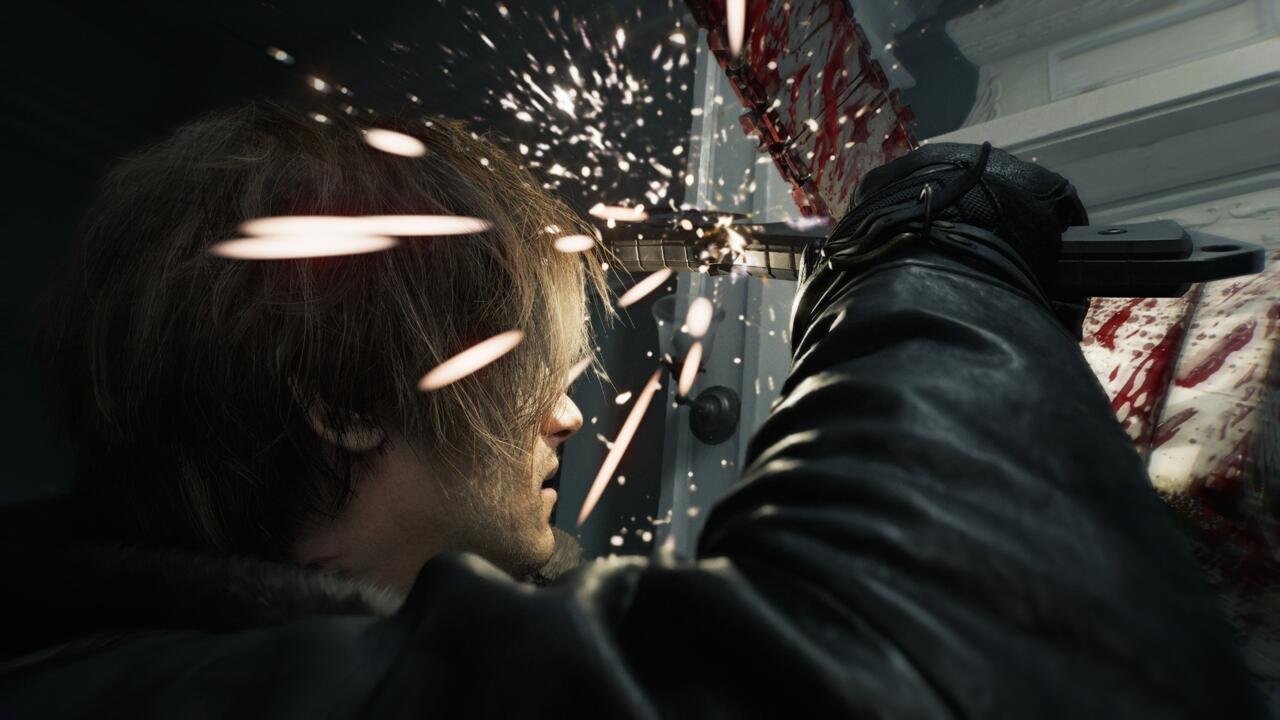
Leon’s dedicated melee weapon is a hatchet, and it adds a useful layer to combat. It can conserve ammo, finish wounded enemies, and help prevent zombies from returning as blisterheads. However, it dulls quickly and must be sharpened, keeping it from becoming overpowered.
The hatchet also allows Leon to parry attacks. This is one of his most important tools, especially in boss fights and close-range encounters. It makes him feel skilled without making him invincible. Leon can handle individual threats well, but groups can still overwhelm him.
This balance is important. Requiem lets Leon feel like an experienced survivor, but it preserves enough clunkiness and pressure to keep the action tense.
Raccoon City Returns With Nostalgic Impact
Leon’s later sections bring players back to Raccoon City, one of the most iconic locations in Resident Evil history. For longtime fans, this return is immediately exciting. The ruined city and damaged Raccoon City Police Department connect directly to the franchise’s past, especially Capcom’s recent remakes.
The RPD is familiar enough to trigger nostalgia, but damaged enough to feel different. This makes exploration compelling at first, especially for players who remember fighting through the building in Resident Evil 2.
However, this nostalgia also reveals one of Requiem’s weaknesses. The game sometimes leans so heavily on the series’ past that it risks feeling too familiar. Returning to classic locations is exciting, but Requiem rarely uses those moments to say something truly new.
Puzzles Are Too Simple
One area where Requiem feels weaker is puzzle design. Classic Resident Evil games often used puzzles to break up combat and exploration, but many of Requiem’s puzzles are too straightforward. It is usually obvious where an item belongs or how a mechanism should be solved shortly after finding the necessary clue.
Instead of feeling like real brain teasers, puzzles often function as simple pacing tools. They give players something to do between sneaking, shooting, and resource management, but they rarely feel satisfying on their own.
This is disappointing because Requiem’s environments are strong enough to support better puzzle design. The atmosphere is there, but the challenge is often missing.
Some Trial-and-Error Moments Hurt the Flow
Requiem also has a few frustrating sequences where the game does not clearly explain what it expects from the player. Some encounters involve environmental hazards or special objectives that only become clear after dying several times.
These moments are not common enough to ruin the game, but they stand out because Requiem is otherwise carefully designed. When the player dies because they made a mistake, that feels fair. When the player dies because the objective was unclear, the tension turns into irritation.
Final Verdict: A Familiar but Excellent Resident Evil
Resident Evil Requiem is not the bold reinvention some fans may have expected, but it is one of Capcom’s most confident modern Resident Evil games. It knows exactly which parts of the series work and builds two strong campaigns around them.
Grace Ashcroft’s sections deliver excellent survival horror, with limited resources, frightening zombies, smart crafting, and constant dread. Leon Kennedy’s sections bring back fast-paced action, chaotic enemy behavior, brutal melee options, and a nostalgic return to Raccoon City.
The game does have flaws. The structure can feel awkward, the enemy variety is limited, puzzles are too easy, and the heavy reliance on nostalgia prevents it from feeling truly new. But Requiem plays its hits extremely well.
For fans of modern Resident Evil, this is easy to recommend. It may feel like two different games stitched together, but both halves are strong, intense, and memorable.
Resident Evil Requiem FAQ
What kind of game is Resident Evil Requiem?
Resident Evil Requiem is a survival horror and action game that splits its campaign between Grace Ashcroft’s horror-focused sections and Leon Kennedy’s action-heavy missions.
Who are the main characters in Resident Evil Requiem?
The game follows Grace Ashcroft, an FBI analyst trapped in a terrifying hospital facility, and Leon S. Kennedy, who returns for a parallel investigation connected to Raccoon City.
Does Resident Evil Requiem return to Raccoon City?
Yes. Leon’s later sections bring players back to Raccoon City, including familiar locations such as the Raccoon City Police Department.
Is Resident Evil Requiem more horror or action?
It is both. Grace’s sections lean heavily into survival horror, while Leon’s sections focus more on fast-paced action and combat.
Is Resident Evil Requiem worth playing?
Yes. It is a strong modern Resident Evil game with excellent horror sections, intense action, smart resource management, and memorable moments for longtime fans.